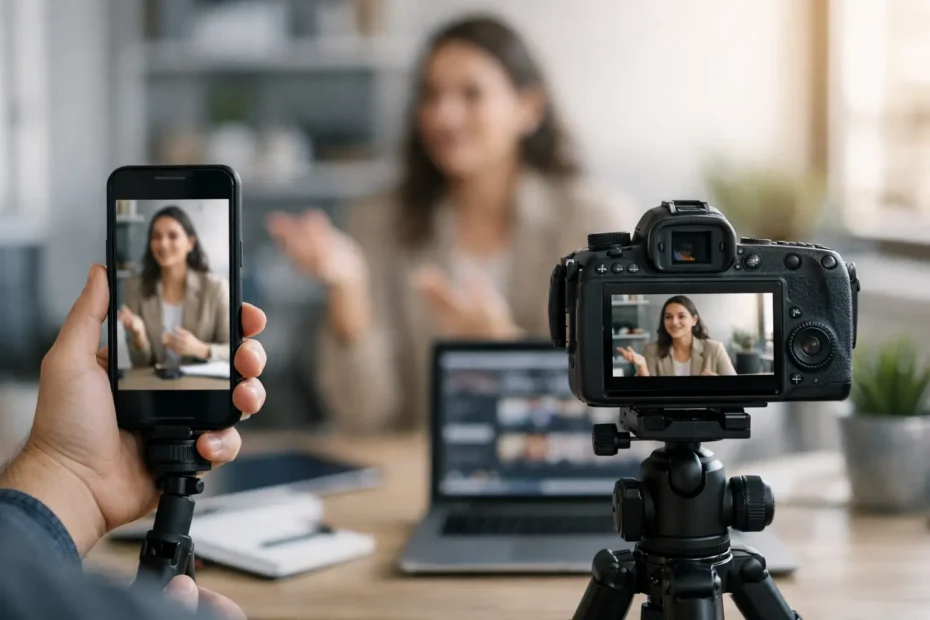
A beautiful brand video can lose its impact in seconds if it appears in the wrong shape for the screen. The decision around vertical vs horizontal marketing videos affects what viewers see first, how long they watch, and whether your call to action feels natural or disruptive. For businesses investing in professional video, format is not a finishing detail. It should influence the plan before the cameras start rolling.
The right choice depends on where your audience will encounter the video, what you need them to do next, and how much visual information the story needs to carry. A quick restaurant special, a hotel room tour, and a company overview may all come from the same brand, but they should not necessarily be framed the same way.
Vertical vs Horizontal Marketing Videos: The Core Difference
Vertical video is built for a phone held upright. It fills the screen on platforms where people scroll with one hand, including Instagram Reels, Stories, TikTok, Facebook Stories, and many mobile-first ad placements. The common vertical format is 9:16.
Horizontal video is built for wider viewing. Its most familiar format is 16:9, the standard for YouTube, websites, presentation screens, connected TVs, and traditional promotional video. It gives the viewer more room to see an environment, follow multiple people, or take in the scale of a property, event, or product demonstration.
Neither format is automatically better. Vertical earns attention by taking over more of the mobile screen. Horizontal creates context by giving the story more visual breathing room. The better format is the one that supports the viewer experience on the platform where the video will do its most important work.
When Vertical Video Is the Better Choice
Vertical video is especially effective when the goal is quick awareness, engagement, or action from a mobile audience. A viewer moving through a social feed is more likely to pause when the image fills the display and the message is immediately clear.
For a local business, that might mean a 15-second look at a new menu item, a behind-the-scenes clip from an event, a customer testimonial, or a fast introduction to a service. For a hospitality property, vertical can bring a viewer into a stylish lobby, a poolside moment, or a carefully prepared guest room in a way that feels personal and immediate.
This format also works well for people-centered storytelling. A speaker addressing the camera, a bride reacting during a first look, a chef plating a dish, or a team member sharing a quick tip can all feel more direct in a vertical frame. The composition naturally favors faces, gestures, and close-up detail.
The trade-off is space. A wide showroom, a large event venue, or a sweeping real estate exterior may feel cramped when forced into a tall frame. Text, logos, and captions also need careful placement so platform buttons, captions, and profile information do not cover the message.
Vertical needs a faster opening
A vertical social video generally has very little time to earn attention. The strongest visual, most useful statement, or most compelling question should appear in the first few seconds. Slow introductions and lengthy logo animations can work against the purpose of the format.
That does not mean every video must feel rushed. It means the opening needs intention. Once the viewer understands why they should care, the pacing can make room for atmosphere, emotion, and a clear next step.
When Horizontal Video Makes More Sense
Horizontal video is often the stronger choice for brand stories that need room to unfold. It is well suited to website homepages, YouTube content, sales presentations, event recaps, commercial campaigns, and videos that will play on larger screens.
A horizontal frame gives a business more freedom to show place and process. A contractor can reveal the full scope of a completed renovation. A nonprofit can move between interviews, community activity, and a wider sense of mission. A venue can show how its rooms connect and how guests experience the space from arrival to celebration.
For weddings and milestone events, horizontal footage also preserves the scale of the day. It captures the full ceremony setting, family reactions across a room, and the energy of a packed dance floor. That broader perspective helps create a film that feels cinematic rather than simply recorded.
Horizontal is not limited to long-form content. A 30-second horizontal ad can be highly effective when it appears before a YouTube video, on a business website, or on a lobby display. The format simply needs a distribution plan that matches it.
Use horizontal for visual context
If the setting is part of the selling point, horizontal deserves serious consideration. Hotels, restaurants, event venues, real estate professionals, and businesses with a physical location often need viewers to understand scale, layout, and atmosphere. A wider frame can do that without making the image feel crowded.
It also gives editors more flexibility for graphics, product details, and interview compositions. That can be valuable when a video needs to communicate more than one message without overwhelming the viewer.
Plan for Both Formats Before Production
The biggest mistake is filming one version and trying to force it into every platform later. Cropping a horizontal video into vertical can cut off a speaker, remove essential product detail, or turn a carefully composed wide shot into an awkward close-up. Turning vertical footage into horizontal can leave empty space or require a less polished background treatment.
A smarter approach is to decide early where the campaign will live. If a business needs a flagship video for its website and shorter social clips for Instagram and TikTok, the production plan should account for both. That may include filming key moments in multiple orientations, using wider camera framing, capturing extra detail shots, and directing on-camera talent to stay within a safe central area.
This does not always require doubling the shoot time. It requires a crew that thinks through distribution while building the creative concept. A thoughtful shot list can capture a primary horizontal brand film alongside vertical cutdowns that feel native to mobile platforms rather than like afterthoughts.
For example, a New Jersey event venue could use a horizontal hero video to show its full property, ceremony spaces, and reception experience on its website. The same production can also deliver vertical clips focused on the floral details, cocktail presentation, guest reactions, and a brief venue tour for social media. Each asset has a distinct job, but the brand feels consistent across both.
Let the Goal Decide the Format
Before choosing an orientation, ask what success looks like. If the goal is more profile visits, direct messages, or local awareness on social media, vertical may offer the strongest starting point. If the goal is to build trust on a website, explain a service, present a portfolio, or support a sales conversation, horizontal may be the better foundation.
Audience behavior matters too. A creator with an active TikTok following should prioritize vertical. A professional services firm using video on its website, in email campaigns, and at trade events may get more long-term value from horizontal. Many businesses need both, but they do not need identical versions of the same message.
Length should follow the same logic. Short vertical clips are excellent for sparking interest, while a longer horizontal piece can answer the questions a serious prospect has after they click through. One catches attention. The other helps a viewer feel confident about choosing your business.
Quality Still Matters More Than Orientation
Format can improve performance, but it cannot rescue an unclear message or weak production. Good marketing video still needs purposeful lighting, clean audio, stable camera work, thoughtful editing, and a story that reflects the brand. Viewers may forgive a video for being brief, but they are less likely to forgive confusion, poor sound, or visuals that do not inspire confidence.
This is where customization matters. A business promoting luxury accommodations needs a different visual pace than a nonprofit inviting people to a community fundraiser. A wedding film should preserve genuine emotion without interrupting the moment. The best production approach begins with the audience, the location, and the outcome the client wants to create.
Vertical and horizontal are not competing creative philosophies. They are tools for meeting people where they watch. When the format is planned alongside the story, your video can feel at home on every screen while still giving your audience one clear reason to remember you.